ThermoVault Pharma Logistics AG ThermoVault
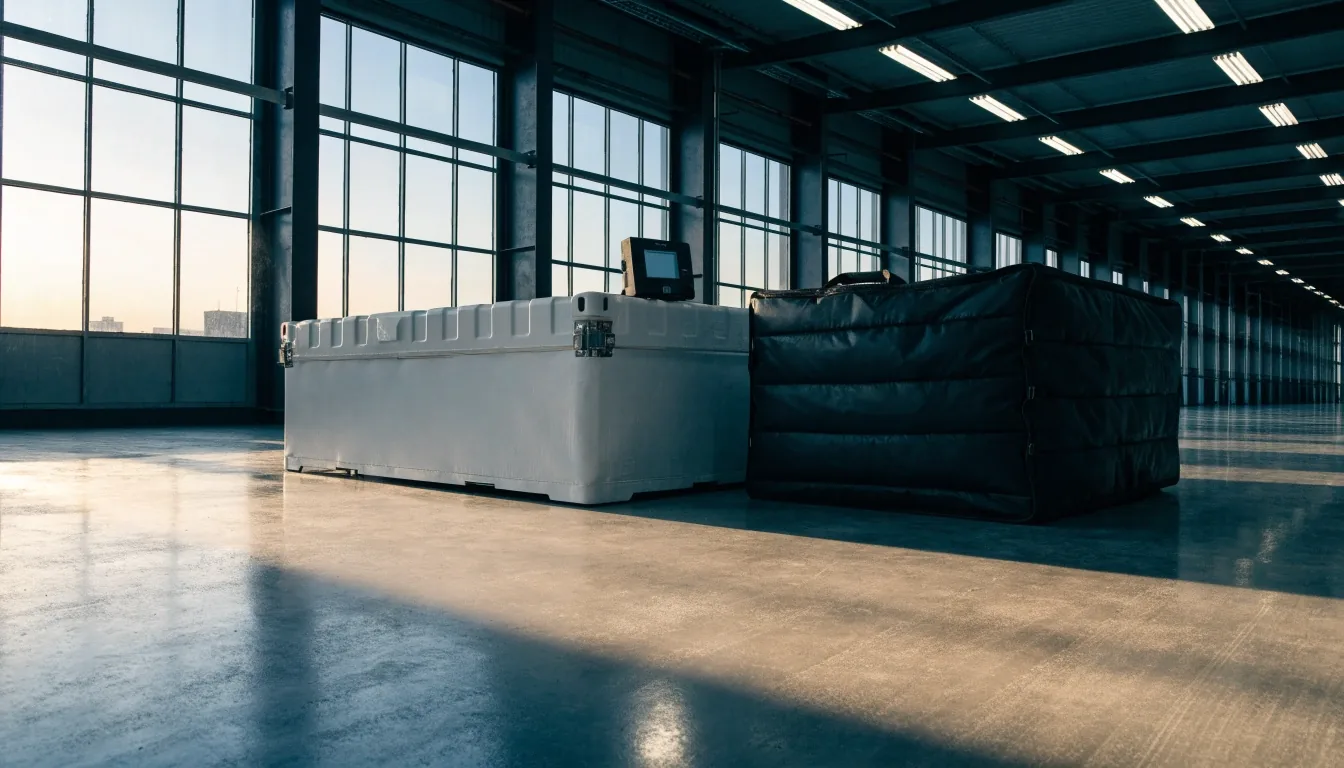
Thermal container opened on a packing bench in a cold-chain logistics hall

Products and specifications

Compare Thermal Containers, Cooler Bags and Data Loggers

Every catalog configuration on this page is listed with the same fields, so procurement and quality teams can line them up side by side. Material construction, temperature range, qualified hold duration, payload, logger standard and validation status — stated or flagged as missing, never left blank.

How to read these specifications

Four numbers decide whether a container fits your lane, and we publish all four for every catalog configuration. Where a lane-specific qualification changes a number, the entry says so instead of quietly rounding.

A container that holds 2 to 8 °C for 96 hours at 30 °C ambient with a 12 kg payload is a different product from one holding the same range for 48 hours — even when the outer box looks the same in a photo.

Read the qualification and certificate page
01

Internal temperature range

The band the configuration is designed to hold — 2 to 8 °C for refrigerated drugs and blood test reagents, 15 to 25 °C for controlled ambient, or a frozen band for specific reagent kits.

02

Qualified hold duration

The time the configuration is qualified to hold that band at a stated ambient profile. Duration without the ambient number next to it means nothing, so we always print both.

03

Payload volume or mass

What the container is validated to carry. Higher payload usually costs hold time unless the wall construction changes, which is why rigid containers come in two build types.

04

Logger standard attached

The compliance listing the temperature record carries — GxP, FDA 21 CFR Part 11, EN 12830, and for some models HACCP International. This is the field auditors read first.

Rigid thermal containers

Rigid containers use vacuum insulated panels or molded EPS depending on duration and weight targets. The choice is not cosmetic: it sets how much payload fits on a pallet position and how long the box holds a band without a re-ice stop.

Both types accept phase change material packs in fixed positions and are available with reusable or single-use outer shells. Internal dimensions can be customized within our tooling range.

Build type

Vacuum insulated panels

A thinner wall for the same hold time. That matters when you ship high-volume diagnostic kits and want to maximize payload per pallet position rather than paying for air.

  • —Suited to long-duration and high-value lanes
  • —Reusable or single-use outer shell
  • —Fixed PCM pack positions, no free-floating packs

Build type

Molded EPS

Costs less per unit and suits shorter lanes where the extra wall thickness is acceptable. A practical default for depot-to-ward runs and seasonal demand peaks.

  • —Lower unit cost for shorter hold windows
  • —Thicker wall, more pallet footprint per unit
  • —Same PCM pack positions as the VIP build
Courier carrying an insulated cooler bag through a clinic corridor

Cooler bags for clinical and last-mile routes

A cooler bag is the right choice when a shipment leaves the depot on a courier van and reaches a ward, clinic or patient-facing site within hours. Bags are lighter than rigid containers, easier to handle on a walking route, and can be carried by one person without a second set of hands.

Insulation is a layered foam and reflective construction, with phase change material packs sized to the bag's internal volume. Each bag ships with a conditioning table for its own PCM set, so the setpoint follows your product's labeled storage range rather than a guess.

Diagnostic sample transport

Internal volumes sized for sample carriers and tube racks, with the PCM set matched to the bag rather than added on top of it.

Vaccine, insulin and reagent runs

Smaller bags for a single ward drop or a pharmacy round, sized so the payload does not sit in a half-empty cavity.

Ask about a custom configuration

Phase change material options and setpoints

PCM packs are specified by setpoint and by mass. Getting the conditioning step wrong is the single most common cause of an in-range failure we see, so conditioning time and temperature are printed on the pack label and repeated in the product datasheet.

Reusable packs are refilled at your site and reconditioned between shipments. Single-use packs arrive already conditioned and ready to load.

Refrigerated 2 to 8 °C

Setpoint: Holds near the middle of the band

Format: Reusable or single-use

Conditioning: Per pack label and datasheet

Controlled ambient 15 to 25 °C

Setpoint: Different formulation for this band

Format: Reusable or single-use

Conditioning: Per pack label and datasheet

Frozen lanes

Setpoint: Specified per reagent kit

Format: Matched to the container build

Conditioning: Confirmed at order acknowledgement

Where a lane needs a setpoint we do not stock, we say so and quote the closest qualified alternative rather than substituting silently.

Temperature data loggers by model

The logger range splits into single-use and reusable formats, and into temperature-only, temperature plus humidity, and temperature plus humidity plus shock configurations. Single-use loggers are activated at packing, travel with the shipment, and are read once at destination. Reusable loggers are downloaded, cleared, and reissued on a recurring loop.

Temperature only

Single-use temperature logger

Activated at packing and read once at destination. The practical default for one-way lanes where recovering a device costs more than the device.

Suitable for: short one-way diagnostic and reagent shipments.

Temperature and humidity

Reusable -20 to +70 °C logger

Covers most refrigerated and controlled ambient lanes in one device. Downloaded, cleared and reissued, so the per-shipment cost drops after the first few cycles.

Suitable for: refrigerated and controlled ambient lanes on a closed loop.

Temperature, humidity and shock

Shock-capable logger

Built for fragile payloads where handling damage is a real risk and the temperature record alone would not explain a deviation.

Suitable for: multi-leg routes with several handling points.

Models differ in measurement range, memory and compliance listing. If one device covers all your lanes we will say so; where a frozen lane or a fragile payload needs a different model, we will say that too rather than sell one logger for every route. Logger datasheets are available on request, and the compliance page explains what each listing covers.

A specification you cannot compare is not a specification. Every entry on this page carries the same fields, in the same order, for exactly that reason.

Logger compliance and what each standard covers

GxP, FDA 21 CFR Part 11 and EN 12830 appear on our logger datasheets, and some models also carry HACCP International listing. EN 12830 is the standard buyers use to compare temperature recorder claims in transport, so it is the most useful field when you are lining up models from different suppliers.

FDA 21 CFR Part 11 matters when the temperature record is captured electronically and needs to function as an auditable electronic record. GxP coverage speaks to the regulated environment the device is intended for.

HACCP International listing is mainly a food-safety marker. It tells a pharma buyer that the device also meets food transport expectations — useful if your logistics partner moves both.

What each listing is used for

  • EN 12830

    The transport temperature recorder standard. Use it as the common field when comparing models from different suppliers.

  • FDA 21 CFR Part 11

    Relevant when the temperature record is captured electronically and must hold up as an auditable record during inspection.

  • GxP

    Confirms the device is intended for a regulated environment — the baseline most pharma quality teams check before anything else.

  • HACCP International

    A food-safety listing that also signals food transport expectations are met. Useful on mixed pharma and food fleets.

See ThermoVault quality and certifications

Reusable versus single-use: the cost logic

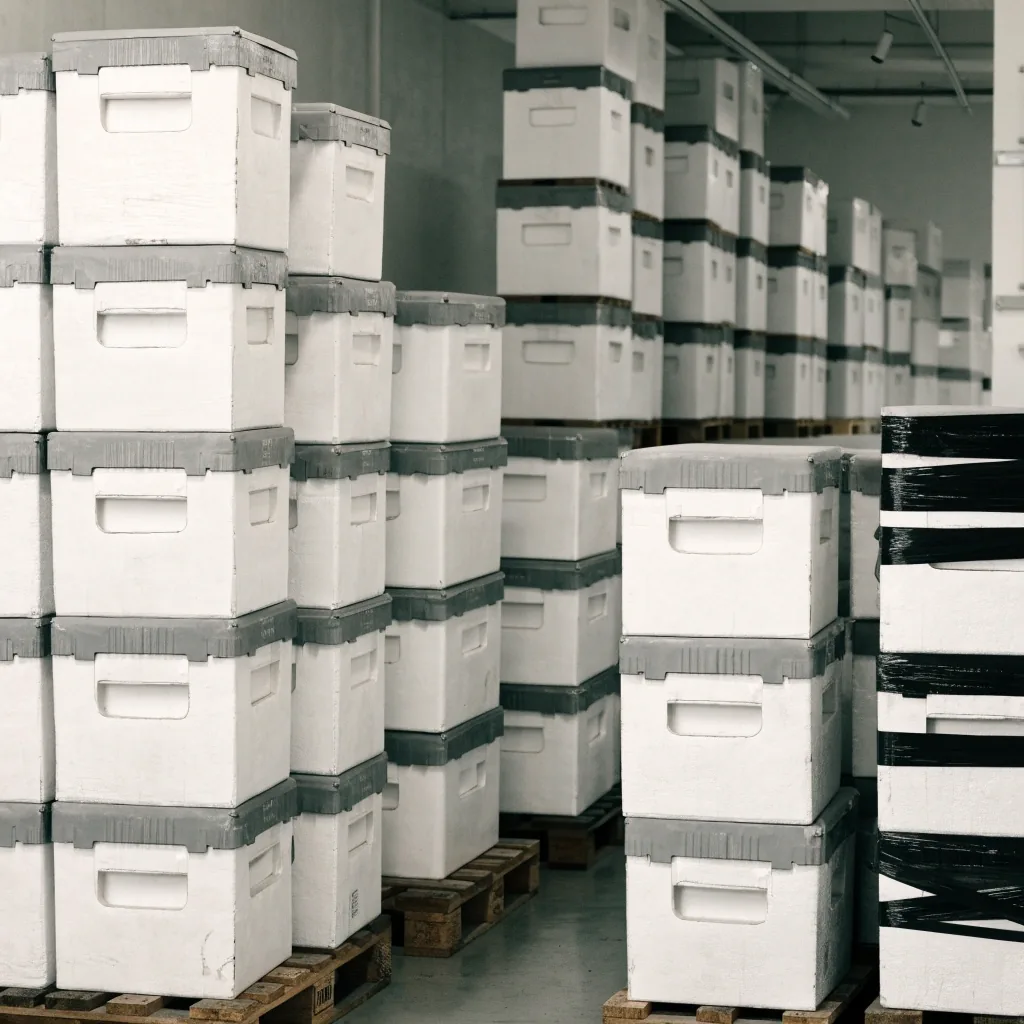
Reusable insulated transport boxes stacked in a warehouse return bay

Reusable systems

They win on closed loops with predictable return flows, because the per-shipment cost drops after the first few cycles. The break-even depends on your return rate, which is why we ask for it before quoting a fleet.

Single-use insulated shipping containers sealed on a dispatch line

Single-use systems

They win on one-way routes where returning packaging costs more than the packaging itself. A mixed model is common: reusable containers on high-volume recurring lanes, single-use loggers on the same lane because recovering and reissuing a device is not worth the labour.

Validation status per configuration

Every catalog configuration ships with a qualification report covering its stated temperature range and hold duration at a defined ambient profile. Reusable containers carry a re-qualification interval stated in that report, so you can schedule it against your own maintenance calendar.

  1. 1

    Catalog qualification

    The published report for the configuration's stated range, hold duration and ambient profile. This is what you attach to a standard lane file.

  2. 2

    Lane-specific qualification

    Where the ambient profile or payload differs from the catalog case, we produce a separate document on request rather than stretch the catalog numbers to cover it.

  3. 3

    Live lane study support

    If your SOP requires a live study, we supply the packaging and loggers and review the resulting data with your quality team.

Custom dimensions and private label

We can produce custom internal dimensions within our tooling range and apply your label to containers and loggers for fleet and audit purposes. Custom work adds lead time, and we confirm the schedule in writing before production starts. Minimum order quantities apply and are stated per configuration.

For customers running multi-site fleets, private labeling simplifies stock reconciliation across depots — a labelled container is easier to route back to the right site than an unmarked one.

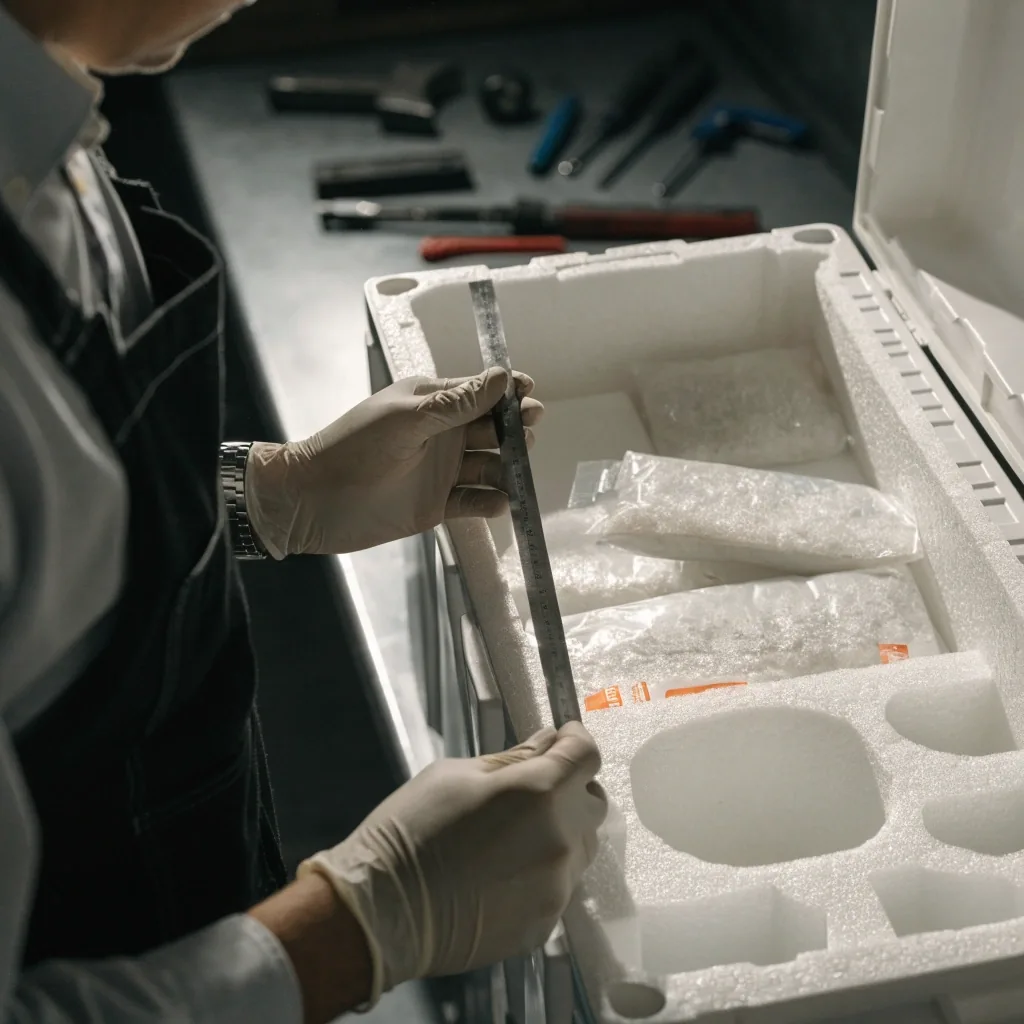
Technician measuring the internal cavity of a thermal shipping container

Custom internal dimensions are produced within our existing tooling range. Anything outside it is a conversation, not a quiet substitution.

B2B ordering and delivery

Shipping terms

Catalog items ship from Zürich on ex-works or delivered duty paid terms, with pallet and parcel options. Export documentation for EU destinations is handled on our side.

Lead time

Custom configurations are quoted with a lead time at order acknowledgement, confirmed in writing before production begins.

Recurring fleet supply

Scheduled to match your ward and depot cycles, so you are not carrying excess stock between demand peaks.

Orders, quotes and specification requests are handled by our Wallisellen team, Monday to Friday, 08:00–17:30 CET.

Send an order enquiry

Questions we get before a first order

These are the four questions that come up most often from procurement and quality teams comparing configurations for the first time. If yours is not here, ask it directly and you will get a straight answer.

What is the difference between a thermal container and a cooler bag?

A thermal container is a rigid, insulated box built for longer hold times and larger payloads, often with vacuum insulated panels or molded EPS. A cooler bag is a soft-sided carrier for shorter last-mile routes where weight and handling matter more than maximum hold duration.

How do I know which PCM setpoint to order?

The setpoint follows your product's labeled storage range. A 2 to 8 °C lane uses a PCM conditioned to hold near the middle of that range, while a 15 to 25 °C lane uses a different formulation. We supply a conditioning table with every PCM configuration.

Can I use one logger model across all my lanes?

Sometimes. A temperature and humidity logger covering -20 to +70 °C handles most refrigerated and controlled ambient lanes. Frozen lanes and fragile payloads may need a different model, and we will say so rather than sell one device for every route.

Do you offer custom container sizes?

Yes, within our tooling range. Custom internal dimensions add lead time and carry a minimum order quantity, which we confirm in writing before production starts.

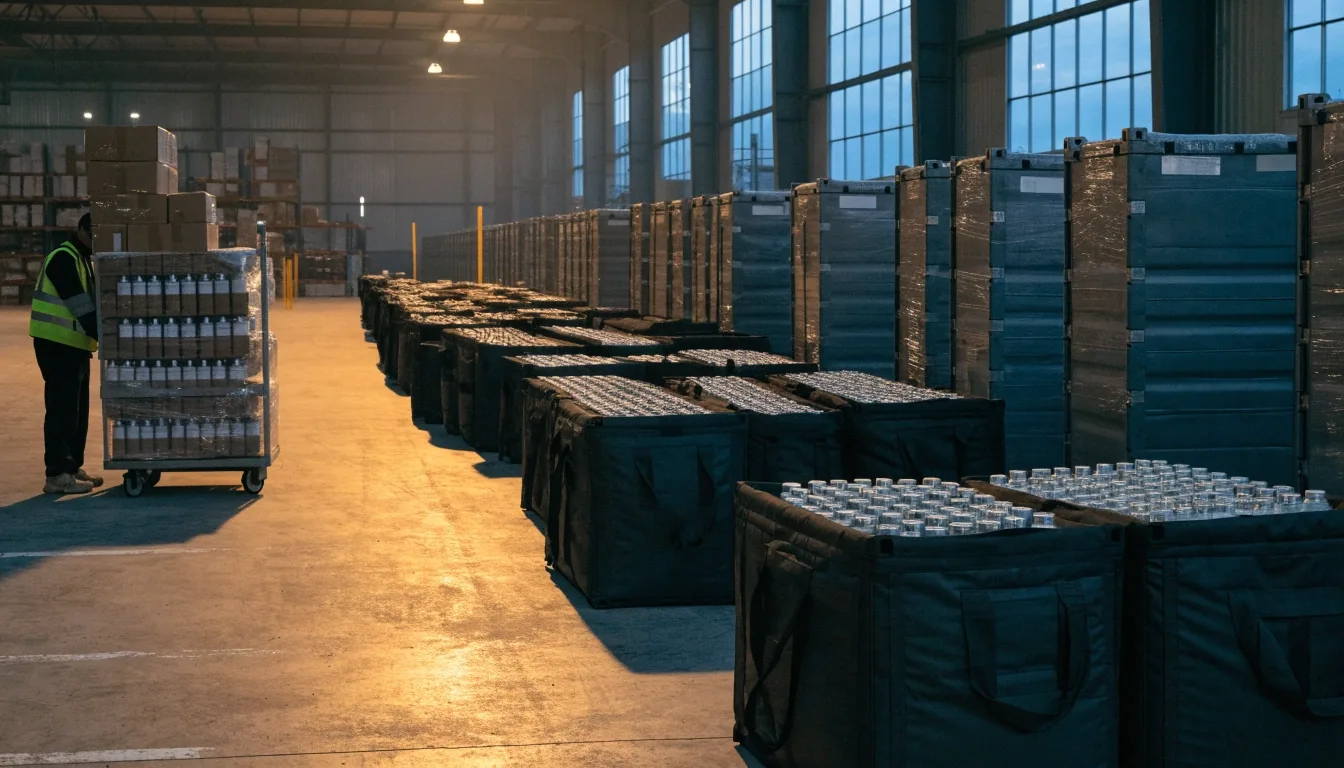
Staging hall with insulated shipping containers prepared for dispatch

Bring us the lane and we will size the configuration

Tell us the temperature range, the route length, the payload and your return rate, and we will come back with the container, bag, PCM setpoint and logger that fit it — with the qualification documents that go with the configuration. If a field is missing for the configuration you need, ask and we will supply it rather than leave a blank.

ThermoVault Pharma Logistics AG · Industriestrasse 42, 8304 Wallisellen, Switzerland · +41 44 885 80 31 · [email protected] · Monday to Friday, 08:00–17:30 CET